# Overview
> A basic overview of the Jito Restaking architecture.
## Jito Restaking Architecture Overview
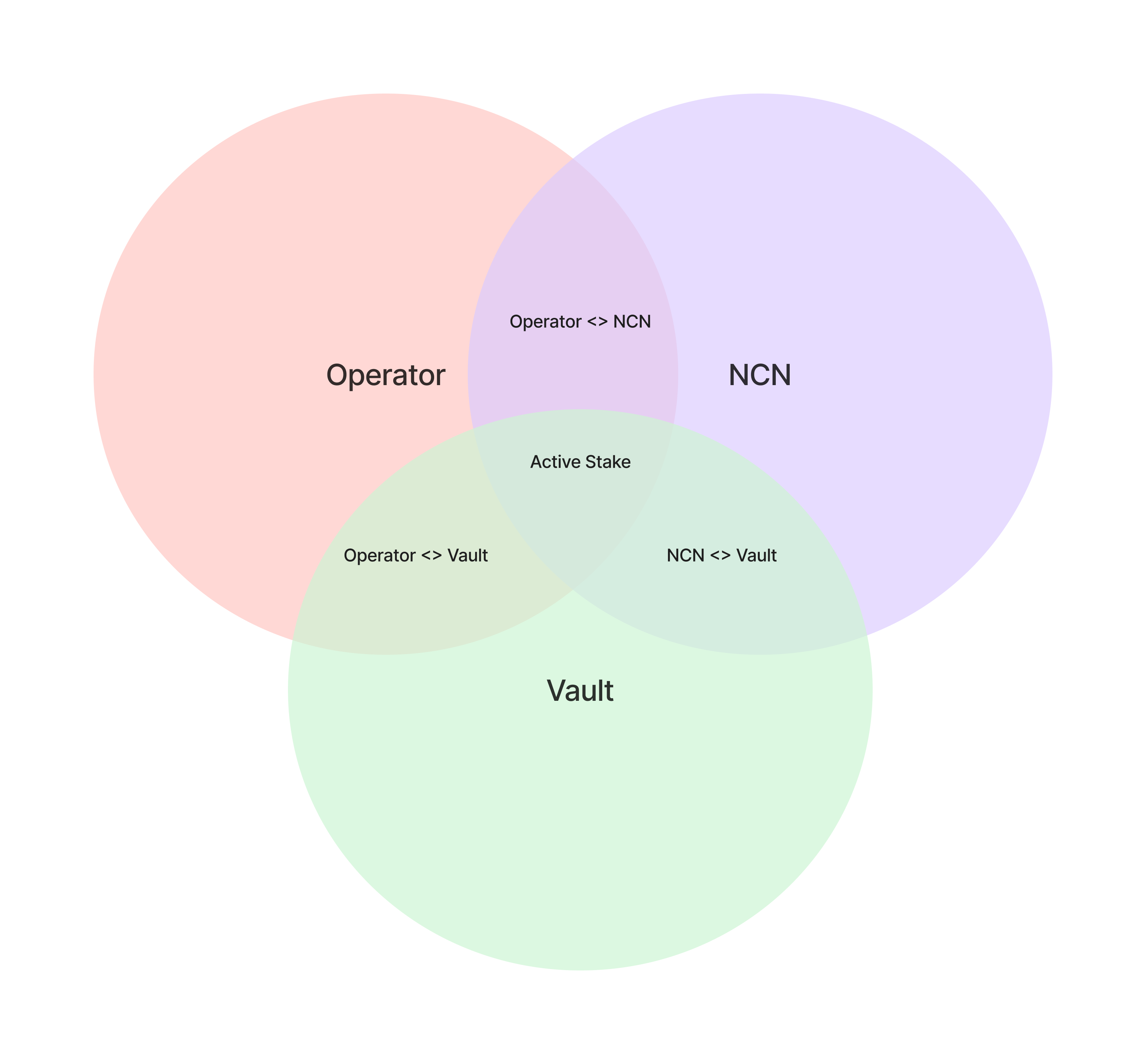
The Jito (Re)Staking protocol facilitates the relationship between three components:
- [NCN](https://www.jito.network/docs/restaking/core-concepts/ncn.md)
- [Operator](https://www.jito.network/docs/restaking/core-concepts/operator.md)
- [Vault](https://www.jito.network/docs/restaking/core-concepts/vault.md)
Figure 1: Active Relationship State - Visual representation of the three-way relationship between NCN, Operator, and Vault components when all have opted in, resulting in activated stake.
All three components must opt-in to a three-way relationship in order to warm-up and activate a staked relationship.
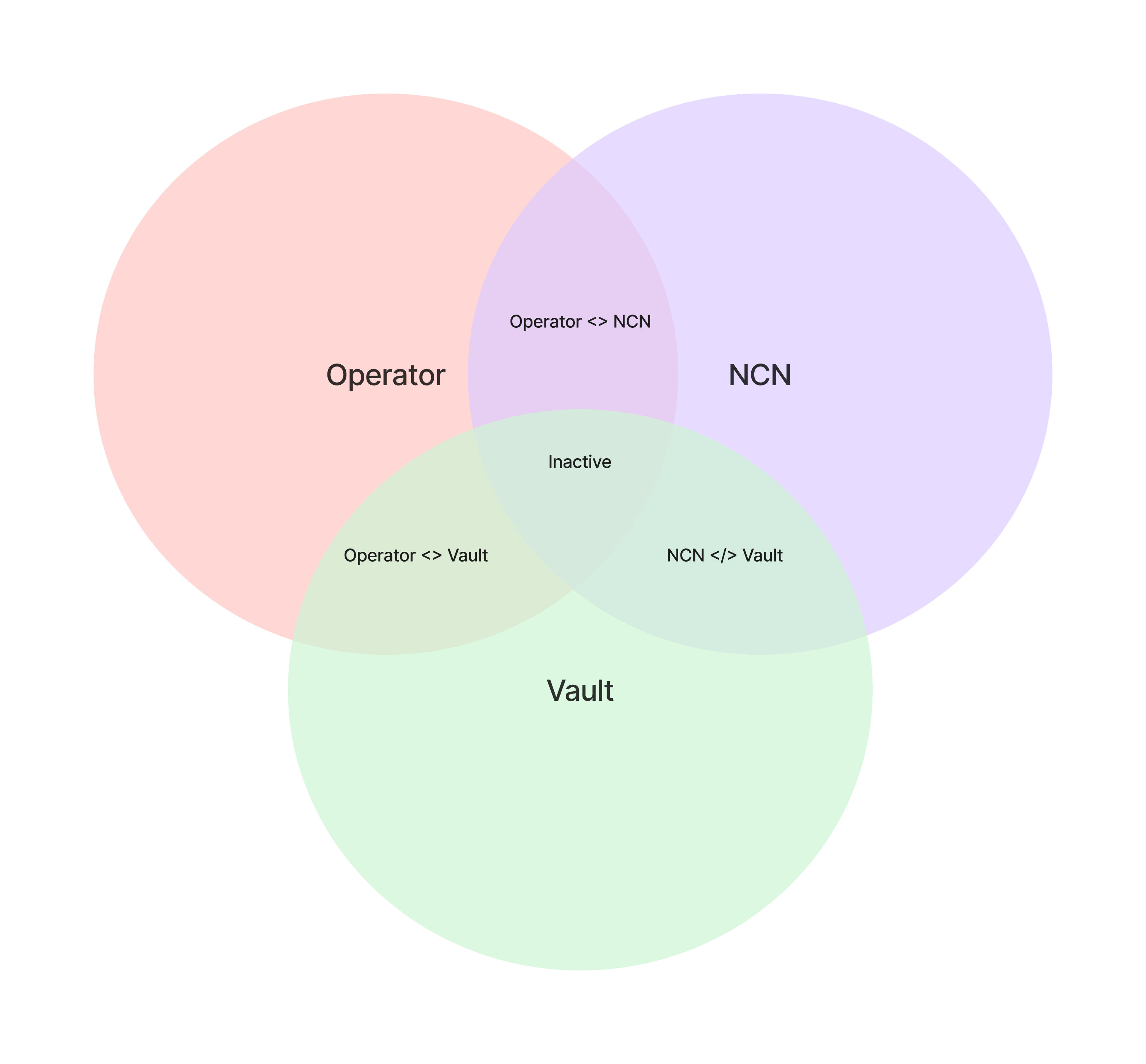
If any of the three components is not "opt-in", there is no stake i.e. the relationship between each component is inactive.
Additionally, any component can opt-out of active staked relationships, in which case the protocol will cool down the relationship in the next epoch and deactivate stake.
Conversely, relationships can be warmed up.
Figure 2: Inactive Relationship State - Visual representation of what happens when one or more components haven't opted in or have opted out, resulting in a deactivated stake.